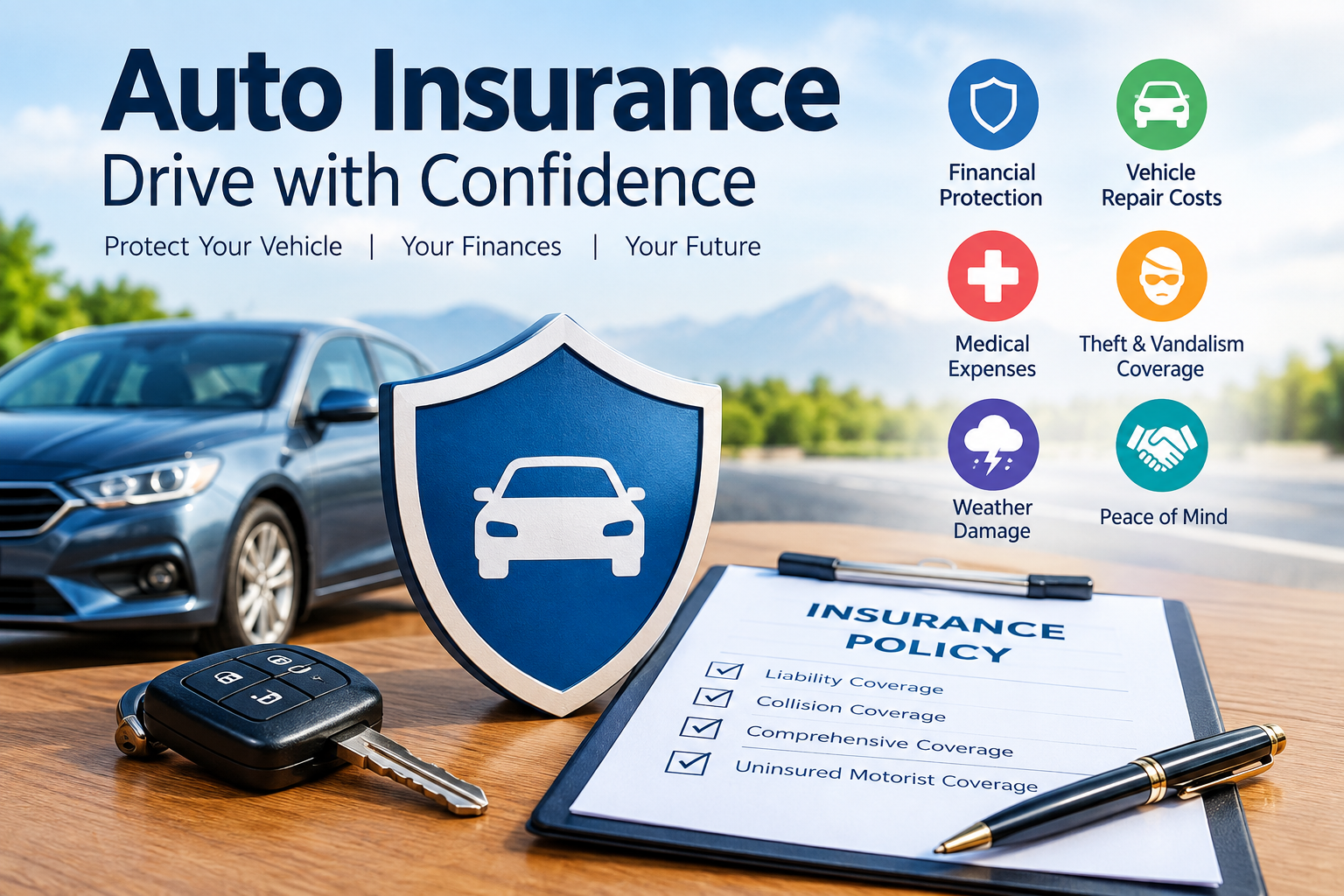
Auto insurance is an important part of owning and driving a vehicle. Whether you drive a car every day, use your vehicle for work, or only drive occasionally, having the right insurance coverage can help protect you from unexpected financial losses.
Accidents can happen even when you are a careful driver. A collision, theft, weather-related damage, or damage to another person’s vehicle can result in expensive bills. Auto insurance is designed to provide financial protection against many of these situations.
In this guide, we will explain what auto insurance is, how it works, the main types of coverage, what affects insurance costs, and how drivers can choose a policy that fits their needs.
What Is Auto Insurance?
Auto insurance is a contract between you and an insurance company. You pay a premium, usually monthly or annually, and the insurer provides financial protection according to the terms of your policy.
Depending on your coverage, the insurance company may help pay for vehicle repairs, medical expenses, property damage, or other covered losses after an accident or another covered event.
The exact coverage and requirements vary by state and insurance provider, so it is important to understand what your policy actually covers before purchasing it.
Why Is Auto Insurance Important?
One of the main reasons people purchase auto insurance is to protect themselves from potentially large expenses.
For example, imagine that you accidentally hit another vehicle. The other car may require thousands of dollars in repairs. If another person is injured, medical costs could be much higher.
Without appropriate insurance, you may have to pay covered expenses from your own savings or assets.
Auto insurance can also provide protection for your own vehicle. Depending on your policy, damage caused by accidents, theft, vandalism, storms, or other events may be covered.
Common Types of Auto Insurance Coverage
Auto insurance policies can contain several different types of coverage. Understanding these options can help you determine what protection you actually need.
Liability Coverage
Liability insurance generally helps cover injuries or property damage that you cause to another person while operating your vehicle.
It commonly includes bodily injury liability and property damage liability. Many states require drivers to carry a minimum amount of liability insurance.
However, state minimums may not always provide enough protection for every situation.
Collision Coverage
Collision coverage can help pay for repairs to your vehicle when it is damaged in a covered collision.
For example, it may apply when your vehicle hits another car or an object such as a wall or pole.
Collision coverage generally comes with a deductible, which is the amount you agree to pay before the insurance company contributes toward a covered claim.
Comprehensive Coverage
Comprehensive insurance generally covers certain types of damage that are not caused by a collision.
Depending on the policy, this may include theft, vandalism, falling objects, fire, hail, or certain types of weather-related damage.
Like collision coverage, comprehensive coverage usually has a deductible.
Uninsured and Underinsured Motorist Coverage
Not every driver carries enough insurance. Some drivers may have no insurance at all.
Uninsured motorist coverage can provide protection when you are involved in an accident with an uninsured driver, subject to the terms of the policy.
Underinsured motorist coverage may help when the other driver’s insurance is not enough to cover your losses.
What Determines Auto Insurance Costs?
The price of auto insurance can vary significantly from one driver to another.
Insurance companies may consider factors such as your driving history, location, age, vehicle, coverage limits, deductible, and previous insurance history.
Your vehicle can also affect your premium. A car that is expensive to repair or replace may cost more to insure than a less expensive vehicle.
Your selected coverage limits also matter. Higher limits can provide greater financial protection but may increase the premium.
How Can You Lower Your Auto Insurance Premium?
There are several ways drivers may be able to reduce their insurance costs.
First, compare quotes from multiple insurance companies. Prices can differ considerably for similar coverage.
You can also ask insurers about available discounts. Depending on the company, discounts may be available for safe driving, multiple vehicles, bundling policies, certain safety features, or other qualifying factors.
Maintaining a clean driving record can also help over time.
Another option is reviewing your deductible. A higher deductible can sometimes reduce your premium, although you would have to pay more yourself if you file a covered claim.
How to Choose the Right Auto Insurance Policy
The cheapest policy is not always the most suitable policy. When comparing auto insurance, look beyond the monthly premium.
Check the coverage limits, deductibles, exclusions, claim process, and additional benefits.
It is also important to understand whether the policy provides enough liability protection for your situation.
Before purchasing coverage, get quotes from several insurers and compare similar coverage levels. Comparing policies on the same basis makes it easier to understand the actual price difference.
Final Thoughts
Auto insurance can provide valuable financial protection for drivers and vehicle owners. From liability coverage to collision and comprehensive protection, different types of coverage serve different purposes.
The right policy depends on factors such as your vehicle, driving habits, location, budget, and the level of financial protection you want.
Before choosing an auto insurance policy, compare multiple quotes and carefully read the coverage details. Understanding your policy before an accident happens can help you avoid unexpected surprises later.